
Your hardest documents run on Opus.
Hal does it for 40% less.
Hal is an Opus-class model, tuned and served on Radium. It beat Opus 5.5 on our 80-task structured benchmark, and there's no tokens-per-minute limit to slow a long job down.
Start with $25 in free credit. No card required.




One model for each kind of document
Hal for the documents cheaper models get wrong, Clarke for routine extraction, and Tycho for classification and routing at volume.
Hal 1.0
Comparable to Anthropic
Opus 5.5 or OpenAI GPT-6 Astra
Clarke 1.0
Comparable to Anthropic
Sonnet 5.5 or OpenAI GPT-6 Sol
Tycho 1.0
Comparable to Anthropic Haiku
5.5 or OpenAI GPT-6 Luna
Designed for the work you already run these models for.
Classify
Sort incoming documents by type and route them
Parse
Turn files into text, as you do today
Schema
Your JSON schema and field rules
Extract
Read the document and fill every field
Scored against frontier models on real product tasks
Independent Radium benchmark, not endorsed by Anthropic. Claude and Opus are Anthropic PBC trademarks, used for identification only. Results are a single run, provided “as is,” and not a guarantee of future performance. See the full benchmark report
Control the cost per extracted document
Every new account gets $25 in credit. No card required.

Built for documents that have to come out right
Every field in your schema, from the documents cheaper models miss.
$0.011
A 3,000-token document with a 300-token answer on Hal at list price. The same document on Opus 5.5 costs $0.018.
No limit
1,000 requests a minute with a burst of 33, set per organization from day one. A long job never backs off for a token cap.
JSON schema
JSON mode, JSON schema and tool calling, so every document comes back in the shape your pipeline expects.
What changes
The base URL in your client
The model string
The invoice
What stays the same
Your OCR and parser
The Anthropic or OpenAI SDK
Tool and function calls
Parallel tool calls
Streaming, including tool deltas
Structured output
Retry and error handling
Evals, tracing and observability
What the difference looks like monthly
Same tasks, different rate, two bills to compare.
Monthly spend on frontier extraction traffic
Hal 1.0 against Opus 5.5 list pricing as of October 2026, for a document with 3,000 input and 300 output tokens.
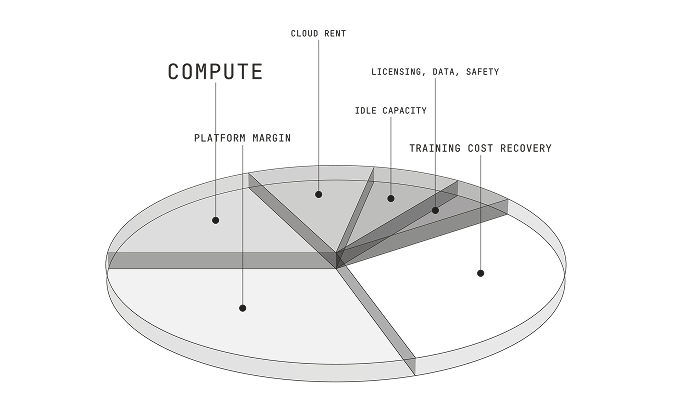
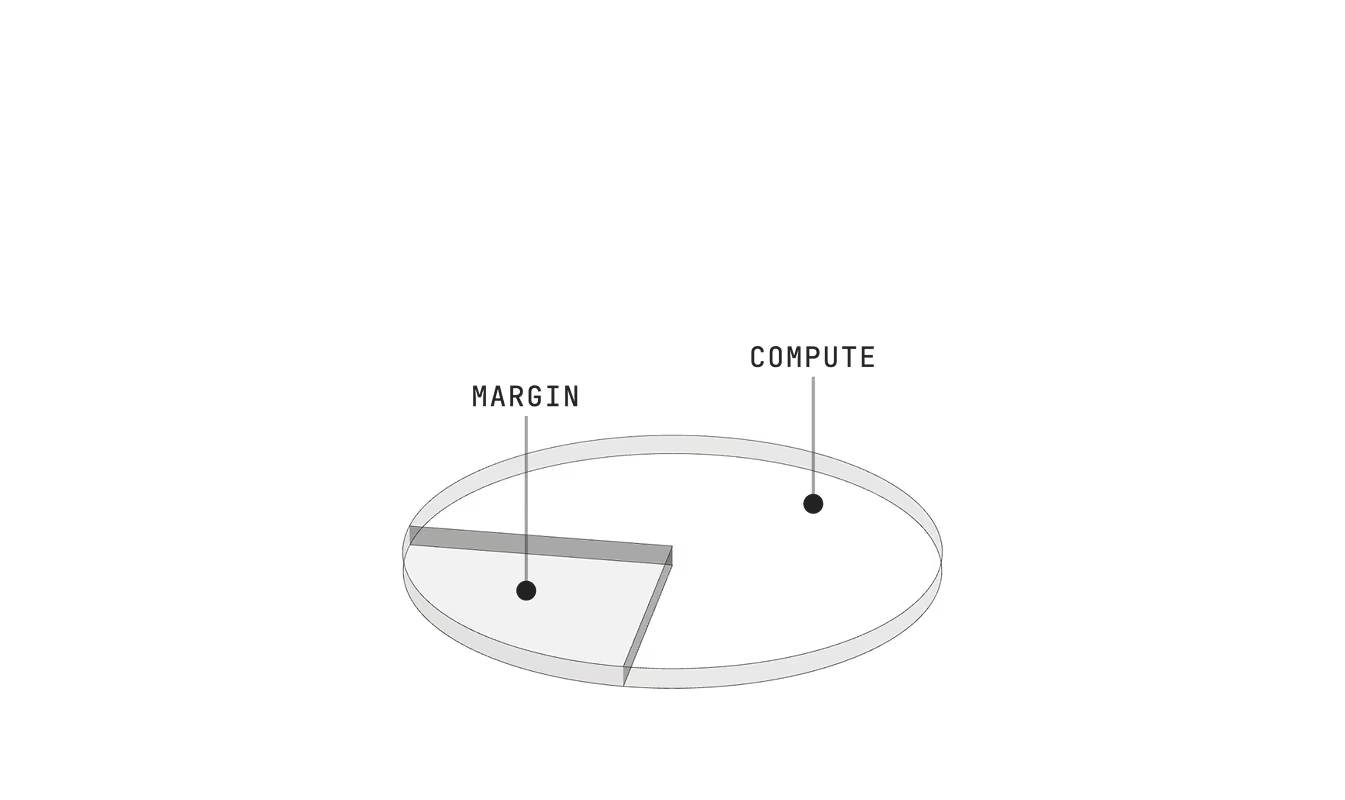
See the workingSix cost layers sit inside a frontier token. Two sit inside ours
The same arithmetic holds whether the call comes from an agent loop or an extraction job.
The switch is three values, and so is the way back

No. Parsing and OCR stay where they are. Radium takes the text once it's extracted and fills your schema.
Use the cheapest model that gets every field right. For clean, repetitive documents that's often Tycho or Clarke. Hal is for the documents where cheaper models miss fields, which is where most teams reach for Opus.
Test it. On our 80-task structured benchmark, scored by exact-match JSON schema, Hal scored 96.25% to Opus 5.5's 93.75%. It's our test, so run your own documents against both endpoints before you move.
Yes. JSON mode, JSON schema and tool calling work on all three models, through the OpenAI and Anthropic SDKs you already use.
1,000 requests per minute with a burst of 33, and no tokens-per-minute limit, set per organization from day one. Above 1,000 requests a minute you can still get a 429, so keep a retry with backoff for those.
No. Radium serves synchronous requests, and each result comes back as its call finishes. If a job can wait 24 hours, a provider's batch discount may cost less. Radium is for the jobs that can't wait.
Yes. Your instructions and schema repeat on every document, and only the document changes. Prompt caching is supported and priced separately from the rest of the input.
Run a few hundred of your hardest documents through both endpoints and compare field accuracy and cost per document before anything downstream changes.
No. Radium doesn't train on customer data, and Radium is SOC 2 compliant.
Change the three values back. Your parser, your schema and your pipeline never pointed anywhere else.