Tokens look simple, but inside them lives a stack of cloud costs, infrastructure margins, and licensing layers.
Every AI platform bills you in tokens. None of them tell you what is in one.
AI platforms charge per token because a token roughly represents computation. What gets bundled into that number is a separate question, and it is not one you are invited to ask.
Understand the Radium stack.
Same class of model.
Different composition.
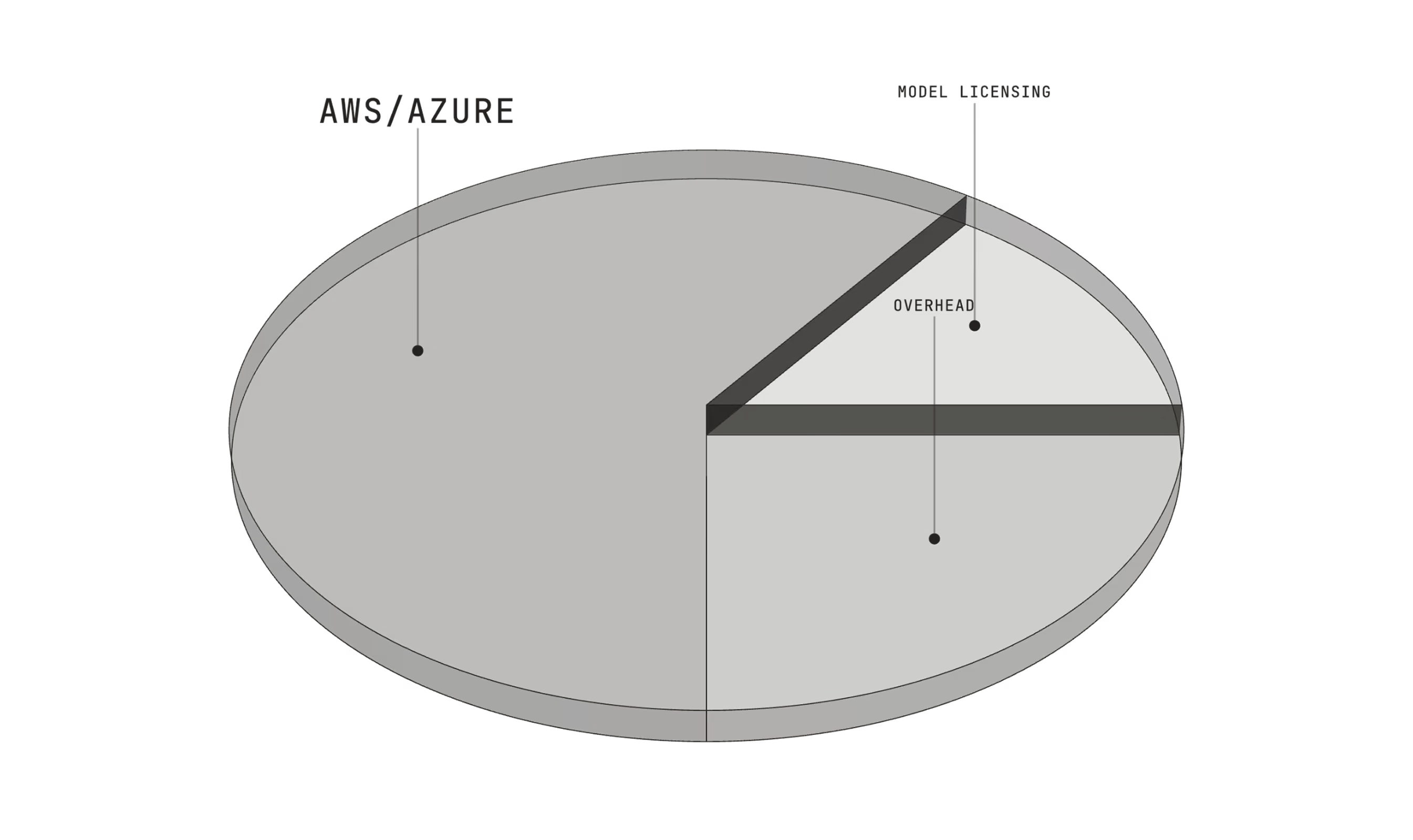
Compute is one slice. The rest is cloud rent, idle capacity, licensing, training cost recovery, and platform margin, bundled into a single number on your invoice.
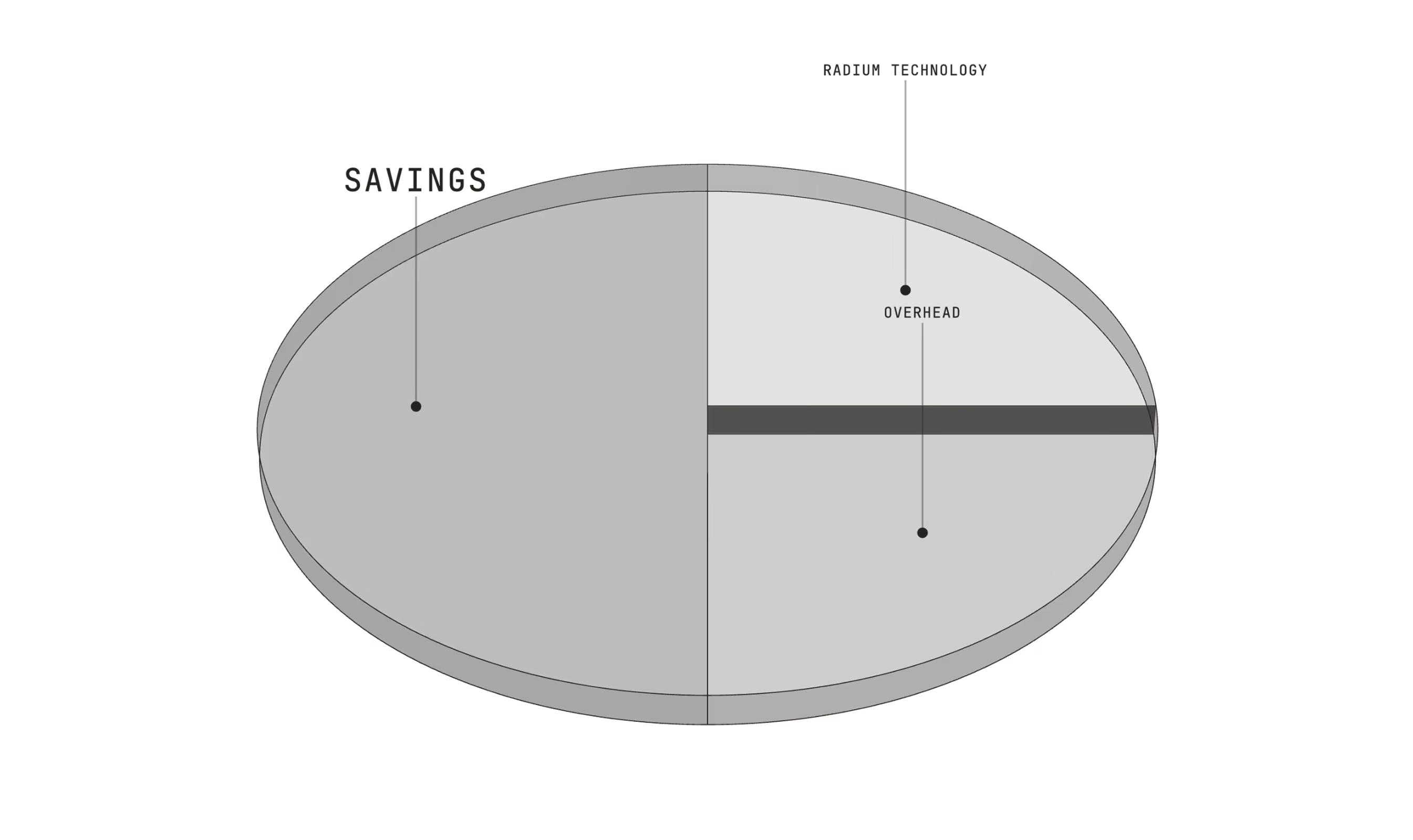
Compute, and the cost of running it well.
Most infrastructure leaves
GPU capacity unused
Traditional inference systems often underutilize GPU capacity due to fragmented routing, idle cycles, and inefficient execution. This means fewer tokens are produced from the same hardware.
Radium has optimized
token throughput on our GPUs
Radium optimizes routing, batching, and execution across the delivery stack. By keeping GPUs consistently utilized, Radium increases the amount of output produced from the same infrastructure.
Radium OS is our proprietary architecture, built as an orchestration layer for production inference. We designed each layer of it, from the hardware we own through routing, batching and execution, to move more tokens through the same silicon.
Independent studies from Stanford CRFM and Carnegie Mellon have measured our accelerator utilisation and iteration time against major cloud platforms.

Five layers, all of them ours.
Owning the stack removes the markup. Designing the stack removes the waste. Radium does both.
Hardware
GPUs we own and operate. No hyperscaler in the path, and no landlord in the price.
Routing
Requests placed against capacity that is actually free, so work does not queue behind a busy machine while another sits idle.
Batching
Requests grouped so GPUs stay saturated rather than waking up for one job at a time.
Models
Tuned open weight models, Hal, Clarke and Tycho, matched to production workloads rather than to benchmarks.
Endpoint
OpenAI and Anthropic compatible, so the code you already wrote keeps working.


156 requests,
zero failures
Across twelve workload configurations at one, four and eight concurrent sessions.
924 output tokens
per second
Peak sustained output throughput at eight concurrent sessions.
16,077 total tokens
per second
Peak total throughput on the largest input workload.
821 ms
Lowest median latency recorded in the run.
Efficiency you can measure.
Throughput claims are easy to make and hard to verify, so ours are published with the workload, the configuration and the limitations attached. The numbers below come from a single node under sustained load.
A bill with nothing to decode.
Every new account gets $25 in credit. No card required.